CMUA: What’s your earliest memory of creativity?
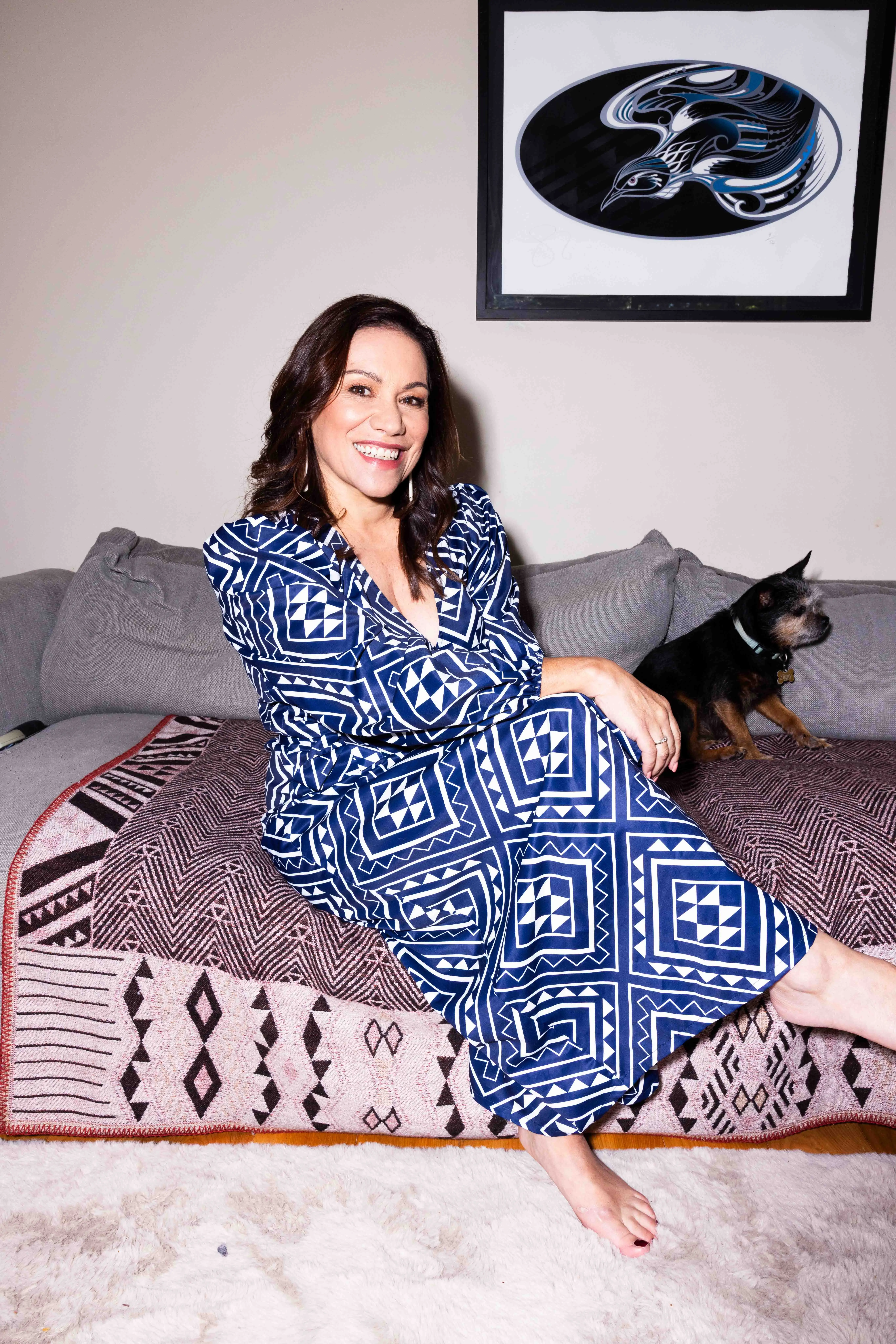
Stacey: I always remember my granddad Frank on his ukulele. My Nana was a big sewer. She had a button jar that just felt like a trove of treasures. My parents actually met at a kapa haka club in Ōtautahi. My grandparents had come from England, my whānau Māori was here.
I think I was born into the world of creativity, of loving dance and singing and bringing together different parts of culture.
When I auditioned for Annie, I’d learnt it with Nana, she had played the piano for me, and we learned it in the wrong key, or they played the wrong key at the audition. I just couldn't recover. I couldn't figure out what to do. Obviously the look, I had it nailed.
But I remember that experience, down to what the piano keys looked like. Although I clearly didn't get it, because I couldn't even find the key, I do remember that feeling of energy in the room of people actually putting themselves out there in a school hall on a Saturday.
CMUA: Can you recommend a Māori creative or creator you really admire?
Stacey: I remember Robyn Kahukiwa. It was one of the first times that I looked at art and felt like she was talking to me, she was bringing me in and actually calling me home, in a way.
I remember her work called Hinetītama, and I always felt so connected to it. When I saw it in person for the first time at Toi Tū, Toi Ora I actually cried. I don't even feel embarrassed about it. I just feel really grateful that that sort of creative endeavour can make you feel so strongly, and I think that's what it's supposed to do.
Whaea Robyn sent me a watercolour that she did, just to say thank you for something incredibly tiny that I did for her. That sits on my wall now, and is one of my most treasured taonga.
"I just feel really grateful that that sort of creative endeavour can make you feel so strongly"
CMUA: What advice would you have for our whānau out there who struggle to express their māoritanga?
Stacey: The interesting thing about Māoritanga, and te ao Māori, is that it's generally a feeling inside us. No matter whether you're Māori or not, there are connecting parts of toi Māori that touch us all. There’s ways to participate and find your way in that don't require you to stand up and do your pepeha in front of anyone.
It’s art, it's reading, it's what you become part of. Maybe it's also time for you to go into learning te reo Māori. That’s endlessly creative, and fraught, and hard, and wonderful, and scary, and exceptional. It’s like going to the gym. Some days are really hard, but you know it's good for you. You know it's going to make you stronger eventually.
CMUA: What’s it like having your husband as a creative partner?
Stacey: Five out of five. I totally recommend, would do again. It's good to be creative with your partner, and just to see a different part of their brain firing. I love when we are co-teaching, he'll tell a story, and I'll go, “yeah, we're going to get to the next thing timing-wise.” Everyone goes, “wow, what a great story.” And it's probably the only thing they remembered out of the whole class.
Seeing your partner or your friend expressing their creativity, I think, is really intimate in a way, for you to appreciate their brain, their way of thinking, their way to their spirit. I can see my husband go into his own, particularly when he's writing books, but also when he's writing things like mōteatea, composing waiata, I see him go to a different place. And I think that's alluring.
CMUA: Can you share a creative moment that made us?
Stacey: I was involved in the haka world record that we all did at Eden Park. I don't consider myself extremely qualified when it comes to haka performance, but seeing everyone with this intention to go, “you know what? How did France get our world record for haka? I'm going to come along to Eden Park and I'm going to do my version of haka. I’m allowed to.I want to do this together,” was a beautiful, creative experience.
To see everyone in unison, just going for it like, ”this is a stranger, but it's someone who's here for the same kaupapa". That was I think’s a defining creative moment for Aotearoa.
CMUA: What’s your go-to waiata?
Stacey: We all go Poi E, but not everyone knows the words. One that's underrated is one that you tend to learn at primary school: “Mauria mai rā, mauria mai rā e ngā mate o te motu e, me ngā tini roimata…”, all the tears are falling. Everyone knows it. Yes, we’ve got Tūtira Mai but I reckon we should bust out that one.