CMUA: What’s your earliest memory of creativity?
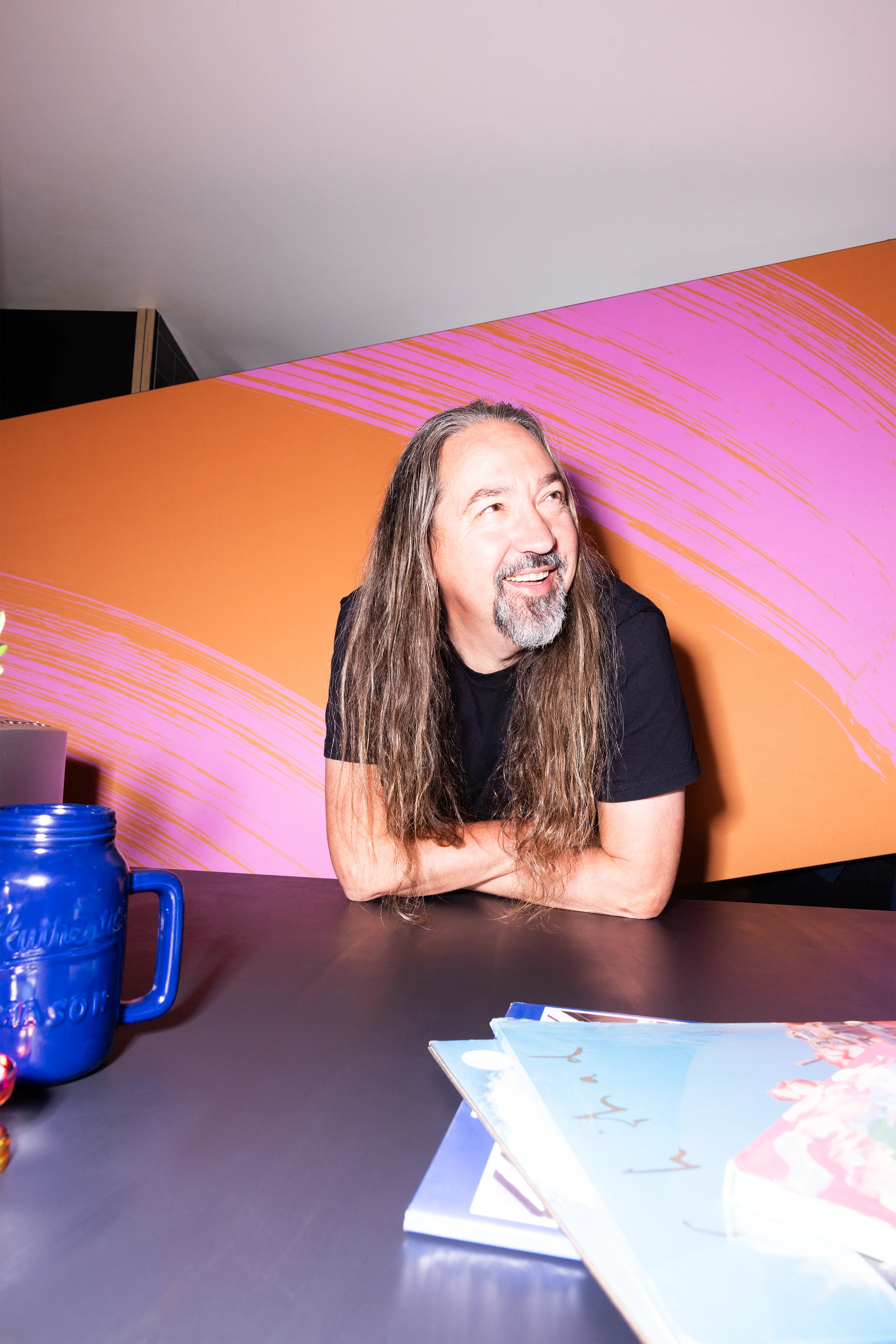
Jon: It was my parents’ record player. They had an all-in-one vinyl player with the speaker built into the front, and a big booklet of seven-inch records that I used to just play and play and play.
I was so fascinated by it, just the process of putting a needle down on a bit of plastic that was running around, sound was travelling down that arm and then coming up that speaker. I thought it was like a magic trick, and I just wanted to find out how that magic trick was done.
It had a black vinyl strip at the front, which I’d just rest my teeth on top of. And one day my mum was like, “your teeth are all black.”
To this day, I still find it quite a magical process: putting a record on, putting that needle down, and then the sound coming out. It's like an entryway into a totally new world.
CMUA: Can you remember a really impactful creative wow moment?
Jon: I’ve got so many of them. Seeing KISS at Athletic Park on my brother’s shoulders because we were too poor to actually be able to afford a ticket. Like a lot of other people, we'd line up alongside the fence. He put me on his shoulders, and I watched KISS over the fence like a criminal.
“Every time I walk on stage is a bit of a wow moment, to tell you the truth. Any time I play guitar.”
When I wrote my first song I was like “wow, I did that”, even if it was really generic and not that deep. It belonged to me. I created something which was something new that didn't exist in the universe before I did that. Even if I was stealing from things I loved, it still belonged to me.
CMUA: How important is it for whānau to be supportive of people’s creativity?
Jon: It's everything. I was lucky. When I was 14 or 15, I was actually the captain of the Wellington cricket team. My dad, who was very into sport, would take me to all the games. He was really gunning for me to have a career in cricket.
At 15, I met Tom Larkin, the drummer of Shihad, who'd found out that I had guitar lessons, and got me to play in his band. I instantly went “this is more interesting to me than cricket.”
I had to tell my dad, “I'm not going to be that cricket player that you wanted me to be.” Once he saw how passionate I was about playing and about where the band I was in was going to go, making plans for playing in this venue, then playing in that venue, going and recording a song, and it became my whole life, he became our biggest fan.
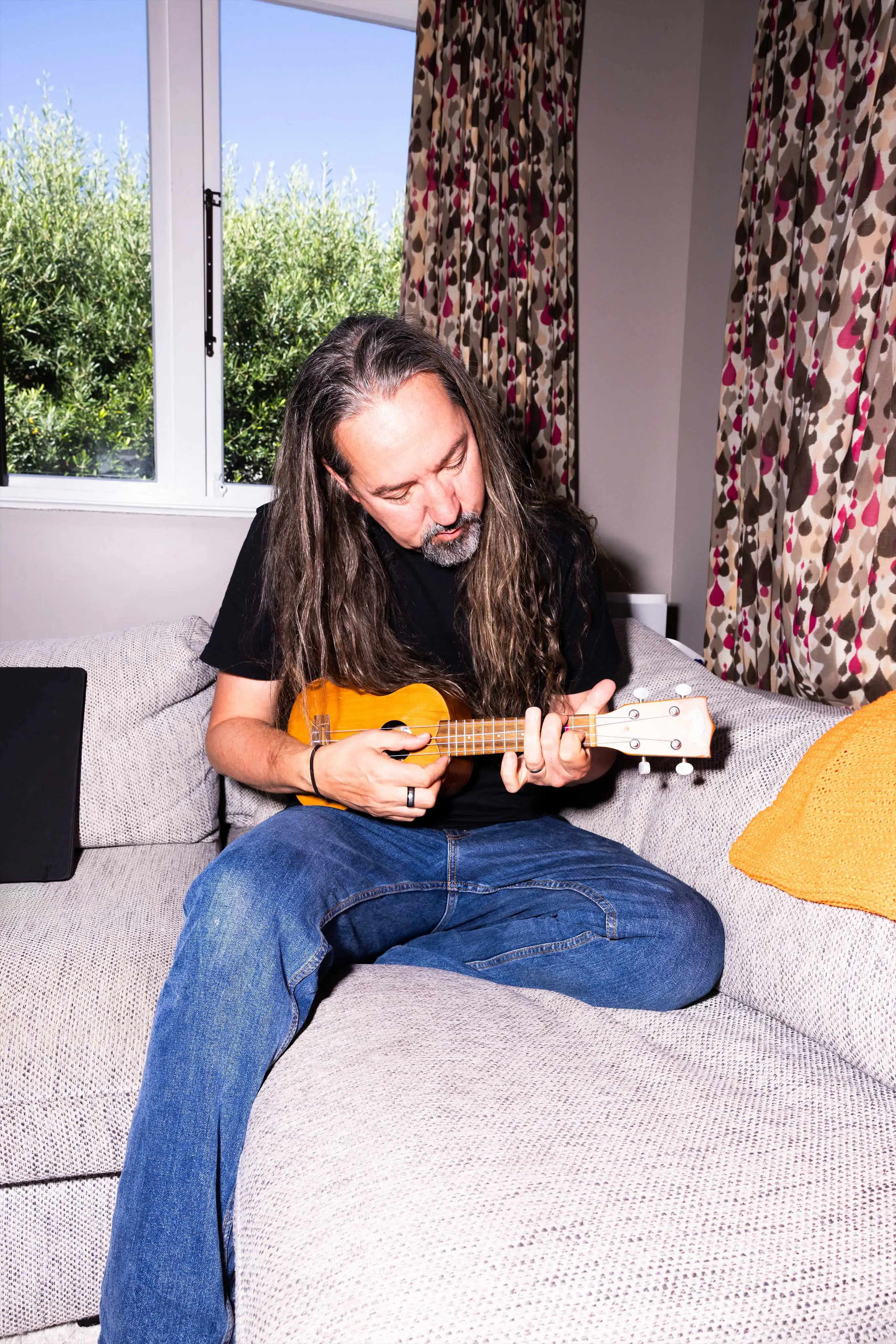
Having a supportive family is everything. They put aside their own ideas of what they wanted their son to be, and they let me follow my dream.
My kids are both creative. They'll be painting or drawing while I'm writing. It’s really nice to have that around me. I think they appreciate having music around them, and I think they enjoy watching a song come together as well, which is really cool.
In our family, we try and normalise being creative, you know. It’s a really positive thing to do.
CMUA: Let’s talk about wellness. When you started playing guitar for tinnitus therapy, did you feel creative or was it functional?
Jon: I had pre-existing tinnitus from being in a loud rock n’ roll band for years and years, but it was always manageable. And then I caught Covid. One of the complications that happens for forty percent of people who have pre-existing tinnitus? It turns it up. That's what it did to me. It turned up so loud that it was like a car alarm going off in my head. Prior to that I could always just sleep it off, and it was fine. This was overwhelming.
I tried cognitive behavioural therapy and one of the suggestions was, “you need to do mindfulness. You can't meditate because it's too loud, but playing guitar is a form of mindfulness.”
I’d never thought of it like that. But of course, it is because when you're playing music, or doing any art, it forces you to be in the present moment. Your brain has to be right there, to make sure you move to the right place or move to the other place, to make that thing happen.
Tinnitus’ focus is attention-based. It's not a sound coming from your ears, it's coming from your brain. So the more you think about it, the louder it gets. But playing guitar made me not think about it. It made me go, “right, how do I get from that note to this note?”
There's so many things going on when you're writing, you’ve got no time to be worried about things.
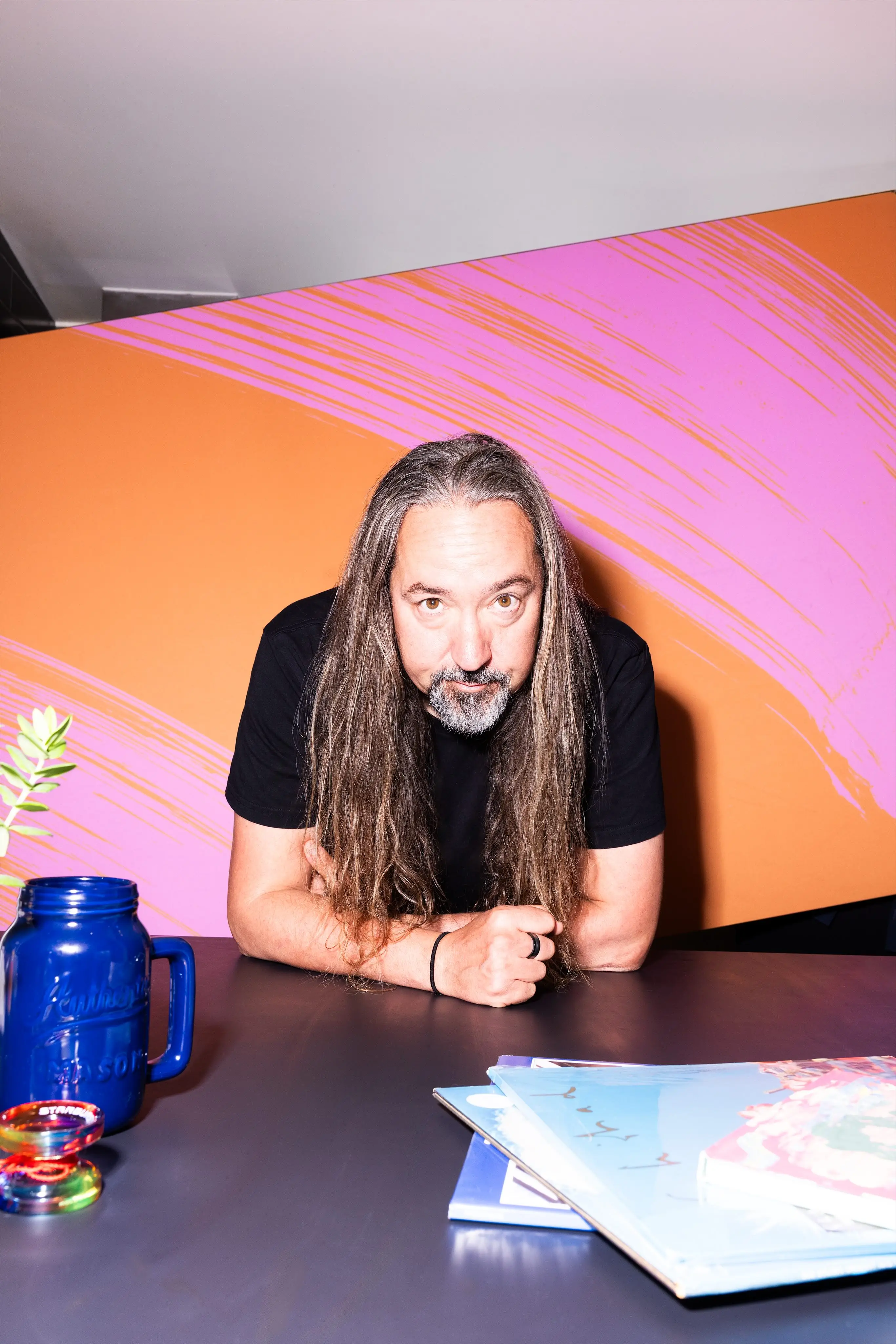
“When you're playing music, or doing any art, it forces you to be in the present moment”
CMUA: What’s a creative moment that made Aotearoa?
Jon: The Big Day Out festival was probably one of those things. It meant for the first time ever, you had local artists playing on the same stage as these big international artists.
We traveled with those artists, so I could be hanging out with Joe Strummer from The Clash and all of a sudden go, “oh, he's just a person whose job it is to be creative. It’s not so unachievable to become that.”
The Big Day Out also brought all the tribes together, and the whole country. That generation, whether you were into dance music or rock music or alternative or whatever, we all congregated in Tāmaki Makaurau and saw the best of what the world had to offer, plus the best of what Aotearoa had to offer.
It made a lot of New Zealand artists believe it wasn’t as far away, or unachievable, and you were validated. If you're sharing the stage with Rage Against the Machine, that’s validation.
CMUA: Was there a creative moment that made you?
Jon: It took a while for me to consider myself a writer. We came from a tradition of mosh pits and stage diving, and creating an environment for hardcore, punk, metal kids to go crazy, right? It wasn't necessarily about the art or craft of songwriting, it was more about the art of providing the soundtrack for people to go crazy.
I wrote the words to a song that became Home Again, where I managed to articulate what it felt like to be a Kiwi living in LA at that time, and how far away from home I felt.
That song opened up a new world of possibility to me. I could discuss things that were personal. I could discuss things that were maybe lofty ideas, but also things that meant something to me, in song form.
It made me start considering myself as maybe a songwriter, where previously I thought I was a heavy metal hack that was just doing his best. Some days I still think that!
CMUA: The Shihad song Feel the Fire talks about losing that spark. What would you say to anyone who loved being creative, but just hit a wall and stopped?
Jon: There’s nothing wrong with being creative and then all of a sudden, feeling like you don't have anything to say. That's fine.
My creativity comes in waves. It comes when I least expect it, and usually when I'm not looking for it. The universe is going to go “zap!” at some point. I've been writing music for 38 years, and I still don't quite know how it works, but I do know that there are things I can do in my life where I can accept that creativity from the universe.
Everyone's got a unique perspective, everyone's got a different upbringing, everyone's got a different environment. So when you think you don't have anything to say, that's not actually true. Everyone's got something to say.
Whether you say it in song form, like that's the art form that I chose, or whether you say it when you put some paint on a canvas or cook your family a beautiful meal, there's always ways of being creative.
Anyone can do it. You’ve just got to find your bit, find the thing that you like.