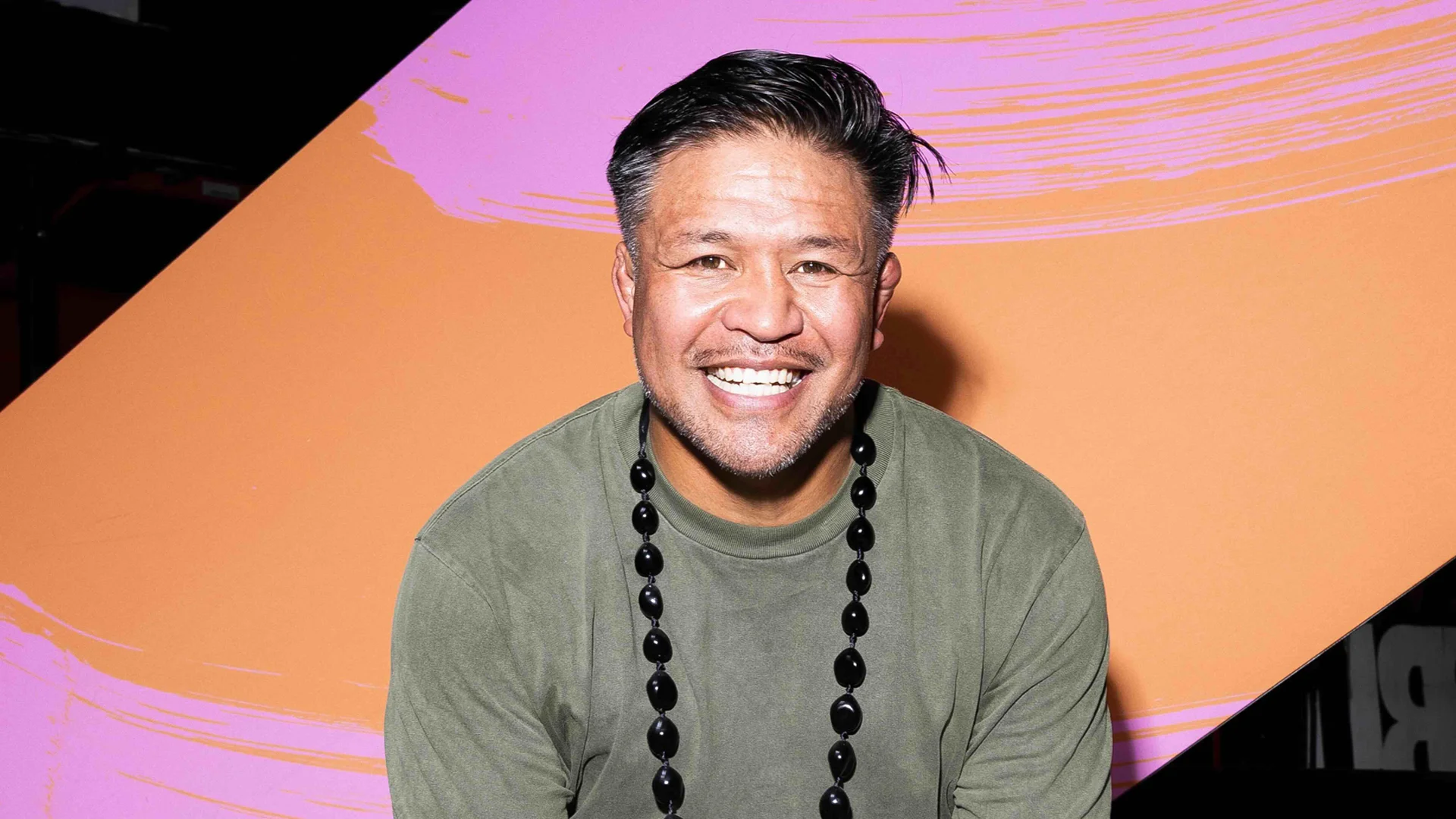
CMUA: What’s your earliest memory of creativity?
Keven: In the backyard, me and my older brother Luke would go head-to-head playing rugby. You had to be creative. Dodging the lemon bush, trying to score in the corner where the pumpkins are growing, all while trying not to stand on the prickles!
Also, growing up in Tokoroa with such a large Samoan community, all the boys were in the choir. Singing and rugby, everyone did both.
CMUA: Are there any tries or celebrations that really stand out to you?
Keven: I think about some of the cool tries that we've been able to create on the rugby field. It's an expression, even if my job was just to pass the ball facing backwards, not looking at the other thing.
I remember seeing some of these try celebrations, guys like Henry Fa’afili who was a wing for the Warriors. He used to grab the ball after he scored a try and “cut” it like it was a coconut, and pretend to drink. I just remember waiting, hoping that he would score a try, to see what his next celebration would be. Because even though I was playing a different code, I'd be trying to do the same things too.
"Singing and rugby, everyone did both"
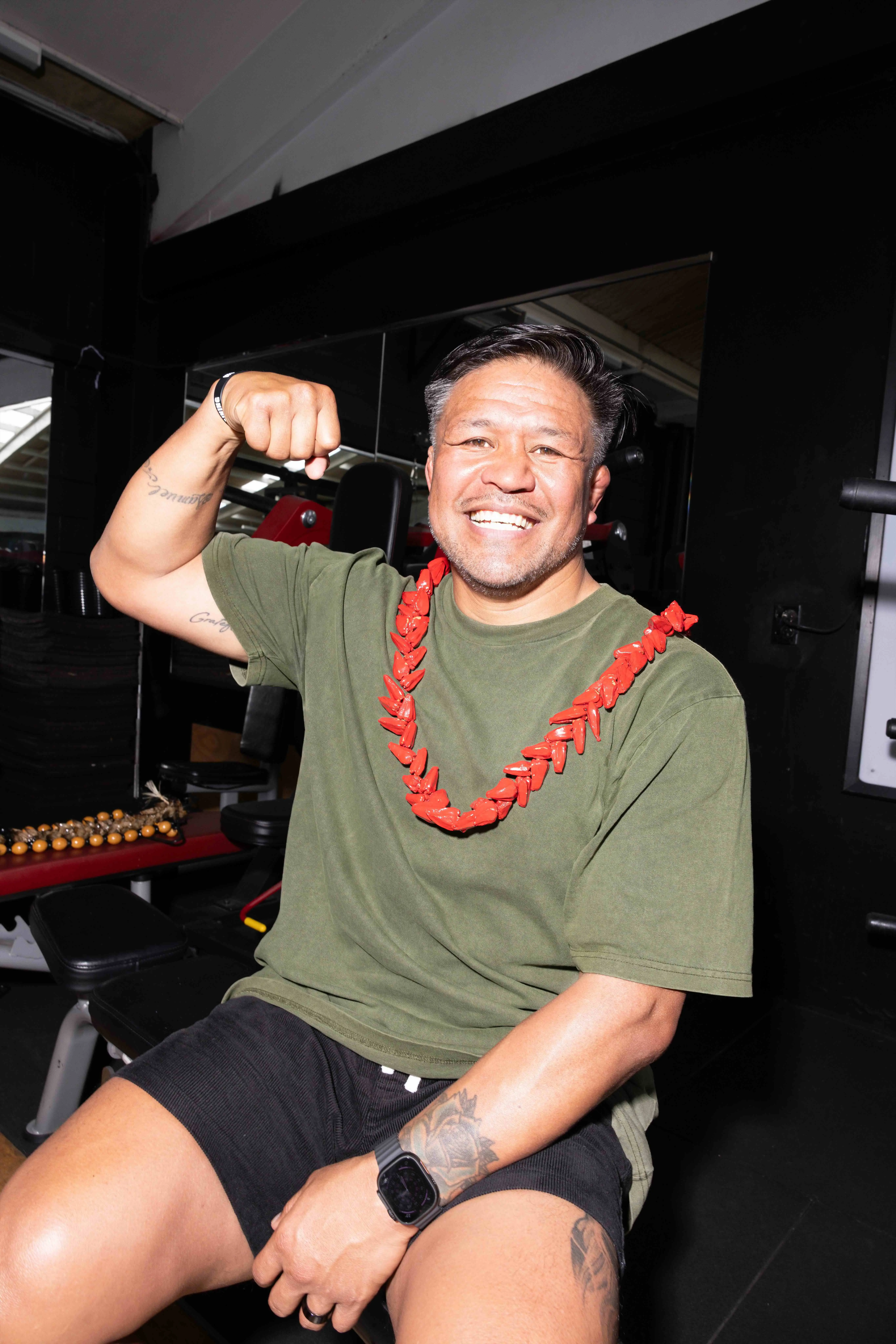
CMUA: What does the expression of haka mean to you?
Keven: Whenever I perform the haka, I'm taking my family with me. I'm taking my heritage. I hope everyone sees the pride that I have in our country, and representing our culture here as well.
Maybe sitting on the other side is, “what do people see?” It's us being able to take a part of who we are, where we come from, and take that around the world. No matter where we travel, you could say “All Blacks” and people go, “you’re the guys and girls that do the haka”.
We're proud of our culture and how that's integrated with all the different people that are on the field. We look like a lot of different types of people. Pacific Islander, Māori, European.
Haka is always a connection point. It means from our side, you see a mass of people moving as one. You see good alignment. You see people strong like that. What an awesome way to show the world that we're united on this, see that we're really proud of where we come from.
CMUA: What were your cultural experiences like, growing up Samoan in small-town Tokoroa?
Keven: I'm really lucky to have come from grandparents who were pioneers. They moved to Tokoroa back in the 50s. Over time, the Samoan community grew. Growing up in a small place like that, it had a great sense of village or closeness to family.
You always feel proud when you're the minority, when you're the smaller group in town. You stay closer, you stay tighter.
Faith’s a big part. A lot of the connections you have are connected to your church, usually. Family is really tight. Also around building, what does that community look like? My mum was a preschool teacher at one of the Samoan language nests. She was the one that started it in Tokoroa.
I felt really proud growing up in Tokoroa. Gave me that sense of village, closeness to family and culture growing up.
CMUA: Elite sportspeople need their hype songs. Who are some of the local artists on your playlist?
Keven: When I look through my Spotify playlists, Kiwiana, Pasifika, it’s all in there. Why? Because I feel connected to the music when I listen to it. Some of the stories they tell connect with me.
Adeaze would be up there for me because they’re Tokoroa boys. Whenever I hear The Lord is my Light, It's something that connects me back to a feeling that I have when I miss my mum. I can already feel my heart with the butterflies, feeling emotional already.
There’s some beautiful things that music does to you. It takes you to places, and that's probably one of the songs that, every time I hear it, I feel a little bit emotional. I think about their creativity, because my mum had that in spades. I'm able to take her legacy and put that into the work I do now.
"Adeaze would be up there for me because they’re Tokoroa boys"
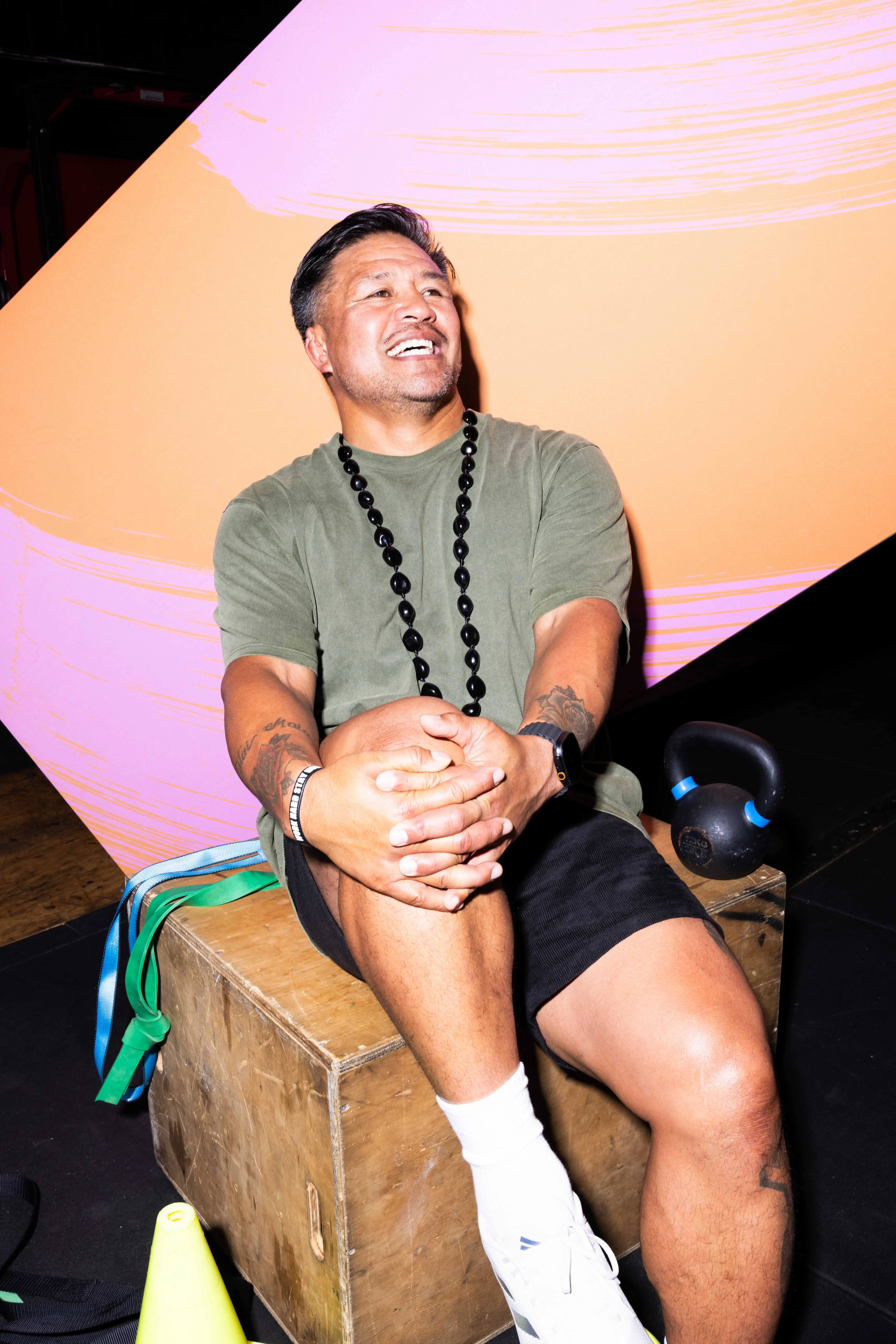
CMUA: How did it feel to jump into the world of books, and illustrate stories for children?
Keven: Over the span of about 10 years, I was lucky enough to illustrate 10 different books, and that was alongside real illustrators, turning those into pieces of legacy - taonga that we could share with people at Starship.
Imagine having to put your work out alongside real artists. You can imagine how I was feeling. But when you strip that expectation away, I felt really proud that I was able to do that alongside them. So taking a mindset of “not good enough” to “well, what an opportunity this is”.
I feel super privileged that I've done that. And yes, I feel really proud that I'm an illustrator. I had some really cool friends, when I remember doing School C, but I'm one that's already illustrated children's books, so how grateful am I?
It’s so important, getting opportunities to be creative. People don't realise this has been a passion for a long time. Art and sports, that’s where I sit in my life. Especially growing up, through my schooling. Just to be able to say that I've been able to follow that through is something really special.
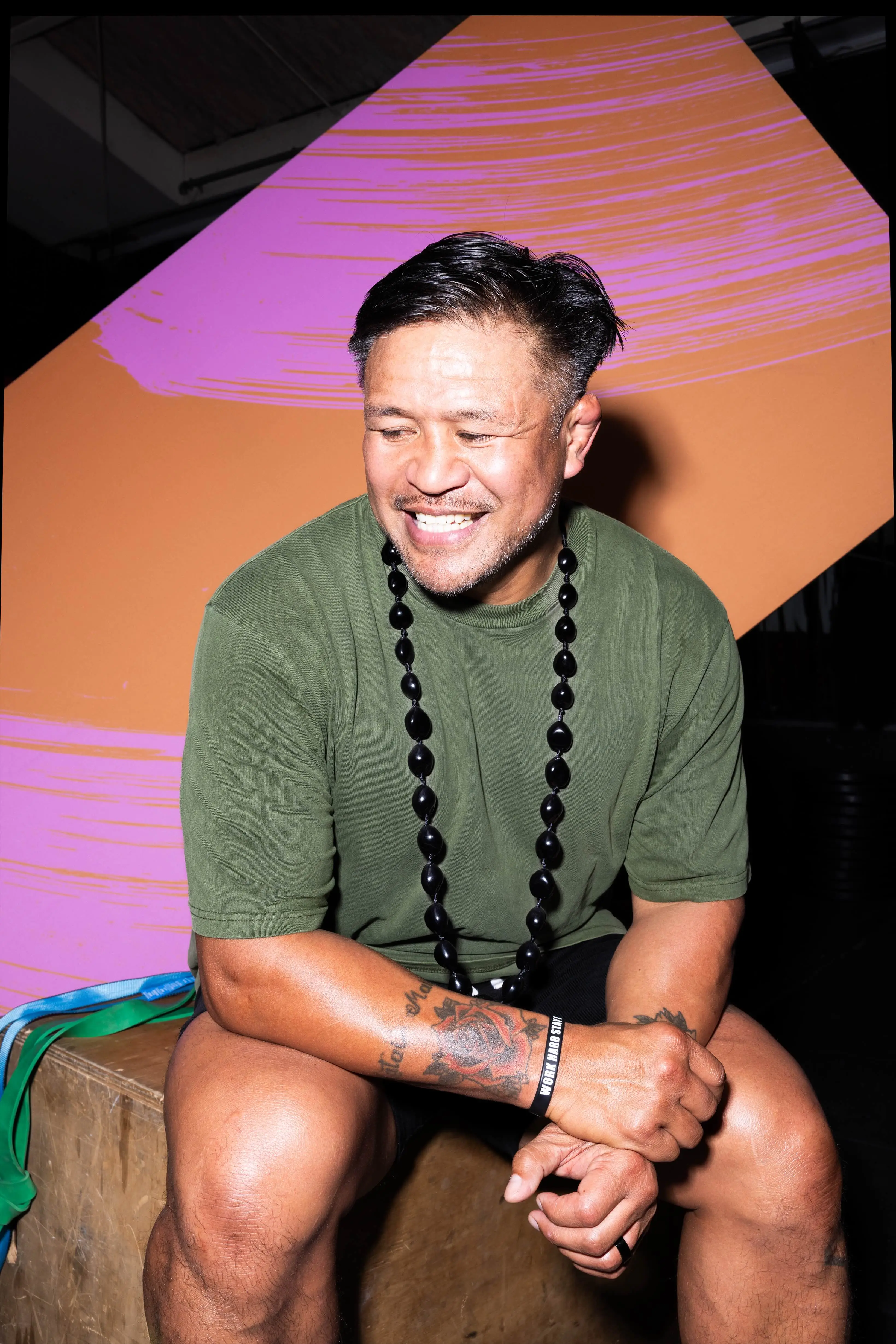
CMUA: What excites you most about New Zealand’s creative potential?
Keven: I really like that we are strong on connecting with our past. We always celebrate the legacy and where we have come from. But moving forward, you look at people that have been through different experiences, come from different backgrounds. I think that allows us to look at things differently.
The potential is endless. It should constantly be changing. Sometimes change feels uncomfortable but in the space of creativity, change is all about expressing and being able to be in a flow state, which is a special place to be. It allows us to have an open mind which we can take into our daily walk in life.
It also means we're not stuck in just being who we are today. I like being able to grow each day.